

|
SOMOS EN ESCRITO
FICTION
|
 Un jardín de claveles blancosPor Alex V. Cruz El chico de boca rosada le mordió los labios mucho antes de conocerlo en persona. Ocurrió en un sueño, pero Lucas no lo comprendió hasta el siguiente día que, mientras caminaba con la boca sabor a sangre coagulada, lo vio andar los pasillos de la universidad Utesa, recinto Moca, como si nada hubiera ocurrido. Lo conoció por sus labios, largos y delgados como orugas de polilla, y por la manera en que caminaba, pecho alto y espalda recta como si llevara la torre Eiffel metida por el culo. Sus ojos las aguas azules del mar mediterráneo, y su pelo carbón carecía la textura característica de pelo malo. Se llamaba Mateo, y Lucas lo supo por las olas de bochinches en la que navegaban las chicas que lo veían caminar por los pasillos ardientes de la pequeña universidad cibaeña. Lucas, con la punta de su lengua, pasó el día jugando con los agujeros que dejaron los dientes de Mateo en el adentro de su boca. Ya no sentía el dolor naufragante de la mañana, pero aún estaba ahogado en el sabor metálico cliché de la sangre. Cuando terminó su día universitario, se acostó en uno de los bancos por el jardín principal de aquella institución, donde podía ver las nubes oscuras contemplar cómo y cuándo arruinarían el día de los jornaleros diarios. “Nos conocemos,” Lucas escuchó a alguien decir, y no tuvo que moverse para saber que era el chico español que traía a todos locos. Sus eses agudamente pronunciadas y el intercambio de la ce por la ze lo delató casi instantáneamente. “No creo,” dijo Lucas, sentándose en el banco y mirándolo a los ojos, porque de que otra manera iba a explicar que lo conoció en un sueño, que todavía lleva el sabor de su boca y sus dientes marcado bajo sus labios. En lo profundo de sus entrañas, en un lugar cerquita al corazón, cuyo latía como locomotora del siglo XIX, llevaba la memoria de la humedad de su piel. “Sabes,” dijo Mateo, “eres muy atractivo…” Lucas perdió el contacto con los ojos de Mateo. Sus cachetes sonrojaron bajo la melanina diluida de su piel. “… para ser dominicano.” Mateo continuó por su camino, el viento jugando con su pelo y sol adorándolo. Lucas, aún sentado en su banco, vio como un chico, quien él conocía de cara, pero no de nombre, caminaba con su mochila a medio hombro, y su camisa ensangrentada en el pecho. La porción inferior de su boca totalmente devorada, y su espalda sudada. “Ese seré yo mañana,” dijo Lucas. Las primeras gotas del diluvio de esa noche se encunaron en el pelo crespo de Lucas, y supo que era hora de echar camino a casa, donde su madre, con sus huesos de osteoporosis, lo estaría esperando con la comida servida en la mesa, y con el orgullo de ver a su hijo universitario plasmado en su cara. *** Se esperaba el tercer huracán de esa temporada, y Lucas se aseguró de llevar en su mochila la sombrilla que no podría usar por los fuertes vientos. También encontró la bufanda olvidada de su primo americano y la envolvió en su cuello bastante veces para cubrir la sangre que caía por la falta de toda su mandíbula y parte de su cuello. No quería ensangrentar el examen de Civilizaciones Mesoamericanas que tenía esa mañana. Ya el maestro se las traía con él y no quería darle más pretexto para que le reprobara la clase. Lucas llegó tarde a clase. El carro público de infinita capacidad que tomó esa mañana se averió a muchas cuadras de la universidad. Entre los fuertes vientos que amenazaban hacer volar esa bufanda teñida de sangre y el agua percusionista, Lucas pasó por el puertón principal sin despertar el guachimán que protegía la universidad para que nadie la atacara en sueños. Los pasillos ya estaban vacíos y solo quedaba el mal olor de almas y cabello mojado. Se encontró con Mateo, nariz perfilada y pelo brilloso, que lo miraba por debajo de sus pestañas. “Quiero más,” él dijo, y fue en ese momento que Lucas reconoció que Mateo lo estaba esperando. La sangre hecha para el sonrojo brotó por la carne desgarrada de donde debía estar la mandíbula, enchumbando aún más la ya pesada bufanda. Lucas desenvolvió la bufanda poco a poco hasta revelar su labio superior y brotes de sangre fresca y coagulada. Mateo se le acercó y, con su lengua larga y puntiaguda, lamió la cara de Lucas por la frente y bajo las sienes hasta encontrar en su cuello un pedazo de piel aún no destripada por sus dientes y empezó a comérselo a mordidas, deleitándose de su piel morena. Una chica, que salió de un salón de clases, gritó y se desmalló al ver tanta pasión entre los chicos. A Lucas no le quedaba nada en el cuello ni en la parte superior de las clavículas más que esa poca carne rosada y obstinada que no quería desprenderse de los huesos blancos. La bufanda ya no podía cubrir su cuello completo y temía que sus compañeros pensara que parecía zombi de una película de terror. Decidió tomar el día libre. De todas maneras ya era muy tarde para tomar el examen de Civilizaciones Mesoamericanas, así que regresó a la parada de carros para ir a casa, pero los choferes, al ver el derroche de sangre por todo su cuerpo, le negaron la entrada y no tuvo mas que irse caminando entre el viento, que soplaba tan fuerte que levantaba los vehículos y los hacia llegar rápido a sus destinos. *** En casa, donde Lucas puso sus libros abiertos en la mesa coja para que secaran, su madre lo esperaba mientras revolvía el sancocho de tres días en la gran paila de aluminio. “Mira la televisión,” dijo ella, apuntando con los labios al televisor que usaba de antena un paraguas para desviar el gotero del techo de zinc. “El ojo llega hoy y va acabar con todo.” Lucas temía que cancelaran las clases. Temía que no iba a poder ver a Mateo. Temía que no iba a sentir sus labios sobre su carne cruda. Esa noche, entre las fuertes ráfagas de viento, la inagotable lluvia, y los macos escabulléndose entre las tablas de madera buscando refugio, Lucas soñó de nuevo con el chico blanco de la escuela. Este le devoró el pecho y el brazo izquierdo dejándolo en huesos y tendones. Lucas despertó, solo su habitación quedaba en pie. El resto de la casa y su madre se los llevó el huracán y nunca fueron encontrados. “Maldición,” dijo Lucas. “Casi no me queda nada que ofrecerle a Mateo.” Lucas, sin nada mejor que hacer en aquel pedazo de casa que espantar las incansables moscas, se puso su mejor ropa, la que le enviaban los primos y tías de Nueva York, y le envidiaban sus compañeros. Perfumó las llagas que cubría la carne mal comida de su cuello sintiendo el breve picor del alcohol tocando sus heridas y emprendió camino hacia la universidad con la esperanza de ver a Mateo, porque aunque no hubiera clases por la destrucción que dejó el huracán, tenía más oportunidades de verlo en las calles de Moca, que en su pequeño y aburrido pueblo. Lucas llevaba su cabeza en alto, balanceada en casi los huesos cervicales, y con una sonrisa solo en lo que le quedaba de labios, navegaba los obstáculos dejado por el huracán. Ni los postes y cables eléctricos, ramas y árboles, hojas de zinc y cuerpos moribundos pudieron borrar su buen humor. Tenía el presentimiento de que no solo encontraría a Mateo en la universidad, pero que ese día el chico de pelo bueno terminaría el festín que era su cuerpo. Entrarían a un salón vacío y por fin Lucas y Mateo serían uno en un mismo cuerpo. Le tomó horas llegar a la universidad. Su ropa toda sudada y ensangrentada. Limpió el banco, donde tuvo ese corto dialogo con Mateo, de las hojas lloradas por los árboles que aún quedaban en pie. Se sentó y esperó y esperó hasta que anocheció. Mateo nunca llegó. Lucas amaneció sentado, espalda recta, en el mismo lugar donde esperaba a Mateo. No durmió, no soñó, solo esperó. Esa mañana, con la salida del sol, llegaron las moscas fastidiosas que le serenaban constantemente sus oídos. Lucas estaba cubierto de ellas, quienes lamían su carne y ponían sus huevos. Él no podía espantarlas, su columna dorsal estaba tiesa, no podía mover ni siquiera su cuello. Pero por fin lo vio. Mateo, el único en la universidad, llego a verlo. La perfecta nariz de Mateo se arrugó al acercarse a Lucas, quien parecía carne seca al sol. Lucas intento sonreír con lo que le quedaba de labios, pero era difícil al ver la cara de disgusto de Mateo. “Que patético eres,” dijo Mateo. “Me das asco.” Lucas miró como el joven europeo tomaba su alrededor, el desastre dejado por el huracán. Él vio como Mateo nunca perdió de su cara la revulsión que sentía por lo que veía, por la tierra que pisaba. Lucas entendió que ya este sitio lo aburria. Ya la gente le molestaba. Lucas sabía que Mateo iba hacer lo que los mismos dominicanos no podía. Iba a tomar sus cosas e irse a otro lugar por otras aventuras. Buscaría a otro que devorar. Lucas no pudo moverse de ese sitio. Allí quedo como monje en meditación. Los compañeros le traían flores y le hicieron una tumba. Cuando sus huesos se hicieron polvo, fabricaron alrededor del banco un jardín de claveles blancos. White Carnationsby Alex V. Cruz The slender-nosed figure sunk his teeth into Lucas’s lips before their first encounter. It happened in a dream, and Lucas could not fully grasp what had occurred until the following day. He wandered about with the lingering taste of clotted blood when he noticed the guy strolling the hallways of Utesa University without a care in the world. Lucas recognized him by how he strode along, chest puffed and back straight as though the Eiffel Tower were lodged up his ass. His eyes, waters of the Mediterranean Sea. His sultry lips were like long, thin caterpillars. His charcoal hair lacked the texture of “bad” hair. Lucas learned through the undulating waves of gossip that swept through the university that his name was Mateo. The news propagated and intensified with each new flock of girls and guys that gawked from afar as he navigated the sweltering hallways of that small Cibao university. Lucas traced the wounds on his lips with the tip of his tongue, no longer plagued by the agonizing sting of Mateo’s bite. Still, he was intoxicated by the rusty taste of blood. After an exhausting day of classes, he lay on a hard concrete bench by the school’s central garden, peering at the sky as the dark clouds brooded over the ideal time to ruin the life of the daily commuters. “We’ve met,” Lucas heard his voice, and without a glance, he knew it was the Spaniard speaking—the one that caused the entire academy to spawn in a frenzy. The way he pronounced the “S’es” and substituted the “ce” sound for “ze” immediately gave him away. “I don’t think so,” responded Lucas—sitting up on the bench to face him directly—because how could he explain that they had already met in a dream and he could still savor his lips? Deep within his pulsating heart, he suppressed the memory of Mateo’s damp skin, which throbbed to the cadence of a nineteenth-century steam engine. “You know what,” said Mateo. “You’re handsome…” Lucas eluded his gaze, finding refuge in passers-by. His cheeks reddened under the diluted melanin of his skin. “…for a Dominican.” Mateo continued on with his day. Lucas was engrossed by how the wind tousled his hair, and the unforgiving sun chose only to caress his delicate pale skin. He fixated on his swaggering stride until the Spaniard was entirely out of sight. A group of chattering students exited the school and Lucas recognized a class peer. His backpack carelessly hung loose off his shoulder, and his disheveled clothing belied his usually compulsively neat attire. His shirt was bloodied and torn near the chest area. Remnants of his jawbone, freshly nude of flesh, glistened like ivory, and his entire chin and lower lip were gone. Lucas felt a strong pang of jealousy but was comforted by the anticipation: “That’ll be for tomorrow.” Lucas hesitated to leave where he and Mateo first engaged, but raindrops began to penetrate his spiraled locks of hair. It was time to go back home where his mother would surely be anticipating his return with a hot meal set on the table for her college son, pride plastered on her face. *** The third hurricane of the season was approaching. Lucas packed an umbrella and rummaged through his chest of drawers until he found the old, forgotten scarf belonging to his cousin in America. He shrouded his neck as crimson excretions oozed from his shredded skin and absent jaw. Lucas didn’t want to stain the Civilizaciones Mesoamericanas exam the professor had prepared for class. The small and rickety public car broke down on the side of the road mere blocks from the academy. Lucas squeezed passed the other passengers and pressed on, his back hunched against the battering winds and hailing rain droplets, a warning that the hurricane would soon anchor. He reached the main gate, where the watchman slept through the howling storm, fiercely safeguarding the school in his dreams. The stench of decaying souls and damp hair permeated the empty halls. Thin-nosed Mateo, with glistening hair, leaned against the wall and gazed directly at him from underneath his thick lashes. “I want more,” he said. Lucas realized that Mateo was waiting for him. The blood intended for the blushful reddening of desire gushed from his missing mandible and torn flesh, saturating the scarf. Mateo unwrapped Lucas’ scarf unveiling the vestiges from the previous night’s feast. Mateo pressed closer and, with the tip of his tongue, caressed Lucas’ face around his forehead to his temples, exploring down the untouched skin near his collar. Mateo’s mouth widened, his teeth scathing Lucas’s flesh, and with firm pressure, tore a mouthful. An approaching schoolgirl shrieked and fainted at the sight of such passion. Lucas felt for his flesh, his fingers encountered but a stubborn thin layer coating his white bones. His scarf was deemed useless and forgotten on the dirty floor of that school to later become the most beautiful red rose. Already too late to take the exam, and with the professor fixed on failing him, Lucas embarked on the long journey home. *** At his house, he set his soaked books on the flimsy table. His mother stirred the sancocho in the large aluminum pot. “Look at the news,” she pointed with her puckered lips. “The eye of the hurricane will hit tonight and destroy everything.” Lucas panicked at the thought of classes being canceled, fearing he would miss Mateo’s lips all over his raw flesh. Lucas dreamed of him that night, sleeping through the blustering gusts of winds, endless rain, and the macos that squeezed between the wooden planks of the house and searched for shelter. In his dream, Mateo devoured his chest and left arm, and left only bones and tendons. That morning, Lucas awoke to the house and his mother swept away by the powerful gust, never to be found; only his room standing. “Shit!” said Lucas, discovering what was left of his body. “I have nothing left for Mateo.” With nothing better to do than swat tireless flies, Lucas laid out his finest clothes, the ones sent by his aunts from Nueva York, envied by classmates and others. He poured cologne on the exposed ribcage held together by the half-eaten flesh, indulging in the brief sting of the alcohol infiltrating his wounds. Classes were suspended due to the destruction of the hurricane. Still, his chance to see Mateo walking the streets of Moca was better than staying in his lifeless town. His head held high, balanced on bare bones, and a contrived smile with what he had left of his upper lip, Lucas navigated the remnants of nature’s wrath—electricity poles and cables, branches and trees, and corrugated metal and corpses. He was confident he’d see Mateo and was convinced the thin-nosed slick-haired man would continue feasting on his body. They would stow away in an unlocked room and become one in the same body. After hours of trekking to the academy, Lucas’s clothes were a spectacle of sweat and blood. With his one hand, he swept away the leaves on the bench and sat down as best as his weak body would allow. Lucas spent the night on the bench, his back stiffened by dry flesh. Refusing to sleep, to dream, he simply waited. Mateo never showed. With the sunrise, a legion of flies arose, competing for a nip of rotting flesh and repulsive enough to lay their eggs. His body hardened like meat hung to dry. But finally, just as Lucas was beginning to lose hope, he came. His perfect nose wrinkled as he neared Lucas. With the few teeth he had left, Lucas tried to smile but quickly became disheartened as he caught the look of disgust on Mateo’s face. “Patético,” said Mateo. “You sicken me.” The young man skimmed his surroundings and the devastation left behind by the hurricane. Steadfast and beyond reproach, Mateo’s revulsion never faulted; Lucas now understood that this place bored him, the people pestered him, and he was repelled by the soil he stepped on. With deep, inconsolable grief, Lucas knew Mateo would do that one thing Dominicans themselves could not; he would search for adventure in unexplored lands and find himself new flesh to consume. Lucas froze at that moment and never moved again. The world around him retook its rhythm. Classes resumed and Lucas's fellow college mates purchased a tombstone and planted white carnations around the rustic bench where his bones turned to dust.  Alex V. Cruz es un escritor dominicano de ficción especulativa nacido en la ciudad de Paterson, Nueva Jersey. Él es graduado con honores de la Universidad de Columbia en la ciudad de Nueva York con licenciatura en Escritura Creativa y Estudios Hispanos. Actualmente está trabajando en su master de la Universidad de Nueva York (NYU). Alex ha asistido a los prestigiosos talleres de escritura Clarion West 2022 y Tin House 2021. Alex comparte su conocimiento sobre la publicación de cuentos con su comunidad de escritores dominicanos impartiendo clases gratis en la plataforma de Asociación Dominicana de Escritores (@dominicanwriters). Sus cuentos pueden ser encontrados en las revistas SmokeLong, Acentos Review, LatineLit, y pronto en Azahares. También él cuenta con un cuento en Quislaona: A Dominican Fantasy Anthology. Pueden encontrar a Alex en las redes sociales Instagram, Twitter, y Threads usando @avcruzwriter.
Alex V. Cruz, a Paterson-born speculative fiction writer with Dominican roots, writes short fiction in both English and Spanish. Graduating Magna Cum Laude from Columbia University, he holds a degree in Creative Writing and Hispanic Studies. He is currently pursuing an MFA in Creative Writing in Spanish at NYU. Notably, Alex is an alum of Clarion West 2022 and a member of Tin House's 2021 Young Adult Workshops. His works have been published in notable online magazines such as Quislaona: A Dominican Fantasy Anthology, SmokeLong, Acentos Review, LatineLit, with two forthcoming stories in Azahares. He is an active member of the Dominican Writers Association, passionately supporting fellow Dominican writers by teaching free publishing classes. Alex is dedicated to sharing his knowledge and empowering his community of writers. Join him on Instagram, Twitter, and Threads using the handle @Avcruzwriter.
0 Comments
Winner Extra Fiction 2022 Image by Guajillo Studio "La Elotera" |

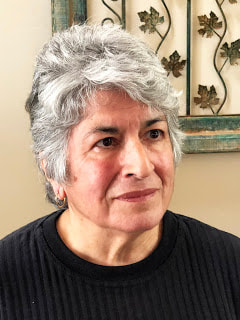 | Gloria Delgado, born and raised in San Francisco’s Haight-Ashbury district, is the daughter of a Mexican father and a Hawaii-born Puerto Rican mother. She and her husband live in Albany, California. One of her stories, “Savanna,” was included in the Berkeley Community Memoir Project’s recently published collection, “A Wiggle and a Prayer.” This is her fourth story for “Somos en escrito.” |
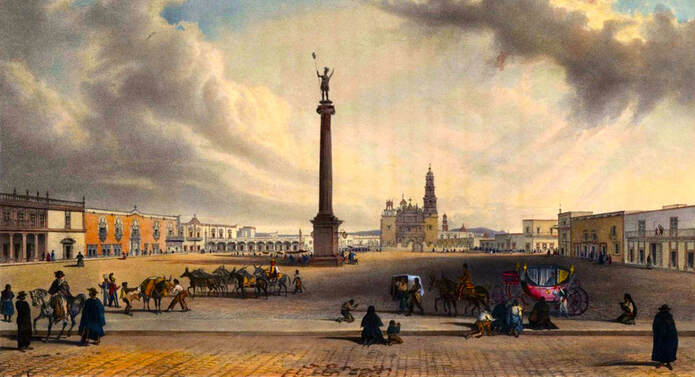
*The well-known lithograph of the Zócalo de La Asunción by Carl Nebel, c. 1828, shows the same plaza about 100 years after the events related in this story.
**Painting of San Antonio de Padua, patron of the poor, by Micaela Martinez DuCasse, the daughter of Xavier Martinez, a well-known Mexican artist who spent much of his life in California. Ducasse also taught classes at Lone Mountain when Delgado was a student.
**Painting of San Antonio de Padua, patron of the poor, by Micaela Martinez DuCasse, the daughter of Xavier Martinez, a well-known Mexican artist who spent much of his life in California. Ducasse also taught classes at Lone Mountain when Delgado was a student.
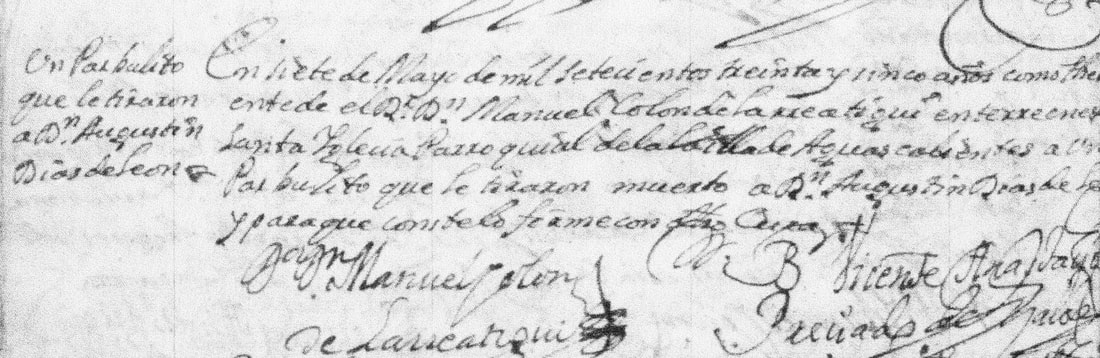
Photo of text showing reference to dead infant thrown at don Augustín Diaz-De Leon, in the church records of Nuestra Señora de la Asunción, Parroquia del Sagrario.
Notes for this story:
This story is a work of fiction based on historically documented events. All individuals with surnames, including their children, were real people; those without surnames are fictional.
In Mexico tens of thousands of residents, Indians, mestizos and españoles alike, died from intermittent plagues, smallpox, chickenpox, mumps and measles. At times there were so many deaths that the priests were too overwhelmed to comply with church regulations as to the proper listing of entries in the death records, able to note only the date of death and the names, if known, of victims who were interred on that date.
Don Augustín Diaz-De Leon’s child, Pantaleón, died in December 1747, eight months after the death of his father. Pantaleón was three years old. The youngest child, Augustín Miguel Estanislao, was born two weeks after his father’s death, on 11 May 1747. He survived into adulthood, eventually settling in Sierra de Pinos, Zacatecas, where he and Thadea Josepha Gertrudis Muñoz Tiscareño married.
Don Augustín’s widow, doña Maria Antonia Fernandez de Palos Ruiz de Escamilla and el alcalde mayor don Fernando Manuel Monrroy y Carrillo, (witness to the death of don Augustín as well as the executor of his estate) in September 1749 were granted a dispensation to marry. Don Fernando was a widower; his first wife was doña Juana Salvadora Jimenez.
Don Augustín’s father, el alférez (subaltern) don Visente Xabier Diaz-De Leon, was at this time the owner of the Hacienda de Peñuelas. Following the death of his first wife, doña Catharina Acosta, he married and raised another family with his second wife doña María Dolores Medina. Upon his death in April 1754 he left money (including 15 gold Castilian ducats) for his intentions, including 100 masses to be offered for the repose of his soul and for his servants, living or dead.
The ex-Hacienda de Peñuelas, still in existence, is one of the oldest haciendas in the Mexican state of Aguascalientes. Established sometime before 1575, Peñuelas predates the foundation of the Villa of Aguascalientes itself. This hacienda consisted of several self-supporting plantation-like communities staffed and farmed by resident Indians and slaves.
The Cathedral Nuestra Señora de la Asunción, originally known as San Ysidro Labrador, was initiated in 1704 and completed in 1738 by don Manuel Colón de Larreátegui, head of the Mitra de Guadalajara. Its northern bell tower was completed in 1764, the southern bell tower not until 1946.
Sources
All birth and death documents cited are from the following:
Church of Jesus Christ of Latter-Day Saints:
FamilySearch.com and other films on line.
The entry cited re the infant, the parbulito of this story, is from:
Mexico Aguascalientes, Aguascalientes, Catholic Church Records
Parroquia del Sagrario, Asunción de Maria
Defunciones 1708-1735, 1736-1748
El Parbulito: Image 530 [Libro quatro de Entierros]
Montejano Hilton, Maria de la Luz:
Sagrada Mitra de Guadalajara, Antiguo Obispado de la Nueva Galicia, 1999
Rojas, Beatriz, et al:
Breve historia de Aguascalientes, 1994
Topete del Valle, Alexandro:
Aguascalientes: Guia para visitar la Ciudad y el Estado, 1973
Vázquez y Rodríguez de Frias, José Luis:
Genealogía de Nochistlán Antiguo Reino de la Nueva Galicia en el Siglo XVII según sus Archivos Parroquiales, 2001
This story is a work of fiction based on historically documented events. All individuals with surnames, including their children, were real people; those without surnames are fictional.
In Mexico tens of thousands of residents, Indians, mestizos and españoles alike, died from intermittent plagues, smallpox, chickenpox, mumps and measles. At times there were so many deaths that the priests were too overwhelmed to comply with church regulations as to the proper listing of entries in the death records, able to note only the date of death and the names, if known, of victims who were interred on that date.
Don Augustín Diaz-De Leon’s child, Pantaleón, died in December 1747, eight months after the death of his father. Pantaleón was three years old. The youngest child, Augustín Miguel Estanislao, was born two weeks after his father’s death, on 11 May 1747. He survived into adulthood, eventually settling in Sierra de Pinos, Zacatecas, where he and Thadea Josepha Gertrudis Muñoz Tiscareño married.
Don Augustín’s widow, doña Maria Antonia Fernandez de Palos Ruiz de Escamilla and el alcalde mayor don Fernando Manuel Monrroy y Carrillo, (witness to the death of don Augustín as well as the executor of his estate) in September 1749 were granted a dispensation to marry. Don Fernando was a widower; his first wife was doña Juana Salvadora Jimenez.
Don Augustín’s father, el alférez (subaltern) don Visente Xabier Diaz-De Leon, was at this time the owner of the Hacienda de Peñuelas. Following the death of his first wife, doña Catharina Acosta, he married and raised another family with his second wife doña María Dolores Medina. Upon his death in April 1754 he left money (including 15 gold Castilian ducats) for his intentions, including 100 masses to be offered for the repose of his soul and for his servants, living or dead.
The ex-Hacienda de Peñuelas, still in existence, is one of the oldest haciendas in the Mexican state of Aguascalientes. Established sometime before 1575, Peñuelas predates the foundation of the Villa of Aguascalientes itself. This hacienda consisted of several self-supporting plantation-like communities staffed and farmed by resident Indians and slaves.
The Cathedral Nuestra Señora de la Asunción, originally known as San Ysidro Labrador, was initiated in 1704 and completed in 1738 by don Manuel Colón de Larreátegui, head of the Mitra de Guadalajara. Its northern bell tower was completed in 1764, the southern bell tower not until 1946.
Sources
All birth and death documents cited are from the following:
Church of Jesus Christ of Latter-Day Saints:
FamilySearch.com and other films on line.
The entry cited re the infant, the parbulito of this story, is from:
Mexico Aguascalientes, Aguascalientes, Catholic Church Records
Parroquia del Sagrario, Asunción de Maria
Defunciones 1708-1735, 1736-1748
El Parbulito: Image 530 [Libro quatro de Entierros]
Montejano Hilton, Maria de la Luz:
Sagrada Mitra de Guadalajara, Antiguo Obispado de la Nueva Galicia, 1999
Rojas, Beatriz, et al:
Breve historia de Aguascalientes, 1994
Topete del Valle, Alexandro:
Aguascalientes: Guia para visitar la Ciudad y el Estado, 1973
Vázquez y Rodríguez de Frias, José Luis:
Genealogía de Nochistlán Antiguo Reino de la Nueva Galicia en el Siglo XVII según sus Archivos Parroquiales, 2001
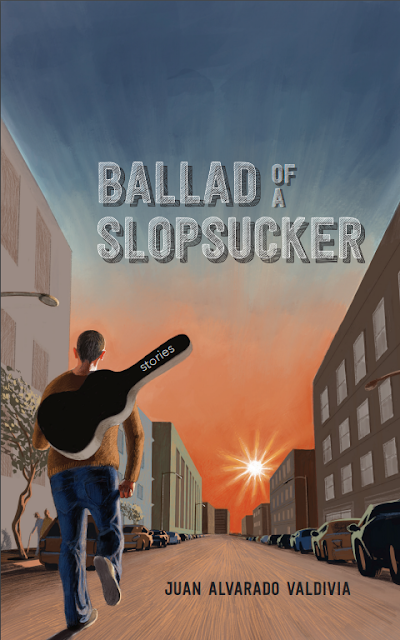
“Ten years later, Elvis regretted their breakup more than anything in his life.”
An excerpt from Ballad of a Slopsucker, a short story collection upcoming next year
By Juan Alvarado Valdivia
Ballad of a Slopsucker
The parking lot at Horatio’s was packed for the ten-year reunion of San Leandro High’s Class of ’87 and Elvis Borboa—who had been voted Most Likely to Be on MTV his senior year—sat in his car near the back of the lot, sucking on a cigarette like nicotine was oxygen. An hour before, he had stood in front of his closet mirror wondering, Should I stay or should I go? He tried on shirt after shirt until he narrowed it down to two—a long-sleeve button-down shirt so it’d look like he had made something of himself, or a striped polo shirt that said I-don’t-really-give-a-shit-about-appearances-but-I’ll-look-presentable. No matter which one he wore, Elvis saw a twenty-eight-year-old straight-edge Latino reflected back to him—the cropped hair, fitted jeans, and a shirt that covered the flaming skull tattoo on his right shoulder. As he stared at himself, he couldn’t help but wonder if the teenage, fuck-authority version of himself would have hated who he had become: just another tool; another sellout working for a big bank.
While he sat in his new Honda Accord, he couldn’t shake the nervous, twisted feeling in his stomach. He popped the Eagles’s Greatest Hits into the CD player. He skipped to “Best of My Love,” which was totally un-metal of him. A long drag from his cigarette followed. It had been months since he had smoked. Oddly enough, the song soothed him even though it reminded him of Susana, his ex-girlfriend from high school. Ever since they graduated, he had occasionally daydreamed of playing and dedicating that song to her (which was totally un-metal of him).
After he flicked the cigarette out the window, Elvis flung the car door open. He strode across the parking lot. On his way to the entrance, he noticed a few faces that looked familiar. He couldn’t remember their names, but he knew they were smart kids back in school. Would they recognize him now? Would anyone recognize him?
Standing by the entrance, next to the part of the restaurant that resembled a kitschy lighthouse, was Joey Marchment. He was smoking a cigarette by himself. Back in high school he was a quintessential stoner-skateboarder. He had gone to a couple of Elvis’s shows. Shit, they even shared a joint at one of their high school parties. Joey had also cleaned himself up for the occasion. Dress shirt, pair of khakis, shiny dress shoes instead of his old Dr. Martens. His bleach-blonde hair—which used to be long and greasy as if he flipped burgers for a living—was now short, thinning, and slicked back. Like Elvis, he had developed a respectable beer paunch.
“Elvis Borboa?” Joey said.
“What’s going on, Joey,” Elvis said, shaking his hand. “Glad you remember me.”
“Of course, man. You were Elvis, the heavy metal god!”
Elvis used to be the front man of a thrash metal band he started at San Leandro High with his best friend, Dontae. The band’s name was Slopsucker. In high school Elvis sported long, curly black hair, torn-up jeans, and a black leather jacket his dad had handed down to him.
“You still play?” Joey asked.
“Nah, man.” Elvis couldn’t help but hang his head.
“That’s too bad. I remember you used to shred.”
“Yeah, well, you know, it’s one of those things. Hardly anyone can pay the bills playing a six-string.”
“Fucking A, man, fucking A,” Joey said, nodding and slowly turning his head like he was watching a thought gently bob away.
Inside, Elvis heard a loud hum of chatter around the corner. Goddamn it, he thought. People were already asking about his former musical self.
A sign by the front podium read, “Class of ’87 Reunion!” An overly smiley Asian woman with a name tag that read “Annie Chow” sat behind a long table covered with rows of printed name tags. They exchanged pleasantries. Elvis remembered she was a major kiss-up in school. She parked her rear front row and center in their physics class so she could laugh at all the inane jokes from their teacher along with all the other voracious grade-grubbers. On top of being pretty, she had always been smart and driven. Once he saw the big glittery rock on her ring finger, Elvis figured she got just about everything she ever wanted in life.
He saw his name tag on the table. He scanned the remaining ones for Susana and Dontae’s. They were MIA. Were they coming? Were they already there? Would they talk to him, or tell him to fuck off? Would Susana be there with someone? A boyfriend? Husband? What if she was inexplicably free after all these years?
The classy restaurant overlooked the San Leandro Marina. The dining area around the bar was roped off for their reunion. All the tables had been cleared out so everyone could mingle. Seventy or eighty people convened throughout the room. Most of his old classmates had dressed up as if they were dining at a posh restaurant in San Francisco, the city he had called home since graduating from high school. Booming laughter from the patio startled him. There was so much happening around him. Before he realized what he was doing, Elvis beelined to the bar. He could’ve walked past Gandhi, Cindy Crawford, or Ozzy Osbourne and not noticed them. Man, did he need a drink.
As he leaned against the counter, staring at the bartender, trying to will him to look his way, Elvis scanned the bar as though his birth name was Cool Breeze. He locked eyes with a classmate whose name tag read “Mindy Roberts.” Her jaw dropped. She waved with such glee that he waved back, although he had never—as far as he remembered—had a conversation with her. Two stools down from Mindy was George, a wild-haired Samoan who had streaked across the football field during a homecoming game Susana had dragged him to. And then there she was: Susana. The woman of his sad and sorrowed dreams of unrequited love. She stood in a circle of women gathered at the other end of the bar. His heart bottomed. She was fucking gorgeous and cute as ever—the same big brown eyes, light-brown skin, and magnetic smile that drew people to her. Her black hair fell over the straps of her blue summer dress. Elvis thought she had never looked so beautiful—except maybe at the junior prom they had gone to together.
Once he spotted her, Elvis was done for; he couldn’t keep himself from stealing glances at her. After all those years they were actually in the same room. And to his complete and dizzying surprise she seemed to be alone. No possible significant other satellited around her.
While he watched her, Elvis couldn’t help but remember—as much as he didn’t want to—the last time they were together.
It all went down on a Saturday afternoon, less than two months before their senior prom. Elvis was in his bedroom restringing his black Jackson King V guitar. Venom’s classic Black Metal blared from his stereo. It was 1987, a year after thrash metal’s zenith when Metallica’s Master of Puppets, Slayer’s Reign of Blood, Megadeth’s Peace Sells . . . but Who’s Buying?, and Kreator’s Pleasure to Kill came out. Elvis’s dad was in the backyard, working in his shed, when his mom knocked on the door.
“Yeah,” Elvis shouted over the music.
“Susy’s here for you!” she yelled from behind the door where Elvis had taped a poster of Machu Picchu shrouded in mist. “Shit,” he said to himself. He took a deep breath as he lurched to the front door.
Susy stood on the other side of the screen door. She wore a black tank top, faded blue jeans, and the green Chuck Taylors he had doodled on with a permanent marker. (He had scribbled “Elvis lives!” on the back heel.) She was concealing something behind her back.
“Hey, you wanna come in?” Elvis said, creaking the screen door open.
“That’s okay,” Susy said. “My dad’s taking us out to lunch with one of his friends. I was running some errands and just wanted to pop in to give you a surprise.”
“Oh yeah, what you got?”
Though he was trying to play it cool, Elvis could feel his stomach knot. The night before, he had snuck out to hit up a party without Susana. Celeste White, the lead cheerleader at San Leandro High, had invited him. Celeste White, the hottest girl in school, had flirted with him. She professed to Elvis that she liked him. This was certifiable wet dream material. To boot, she kept putting her hand on his arm and brushing her blonde hair while they talked. After he stumbled back home in a fog of blissful drunken stupor, he woke up thinking about how good it would have felt to make out with her. To have his hands all over her. The only reason he kept his paws to himself was because he and Susy had been together for two years.
Susy handed him a mixed tape. On the cassette case spine she wrote “Heavy Shit” and drew a smiley face. Years later, remembering those details slayed him.
“I really liked your last mix,” she said. “I think you’re right—the Scorpions are the best thing to ever come out of Germany.”
Elvis combed his long hair to the side so it wouldn’t cover half of his face. He stared off at the front lawn. Earlier that morning he had convinced himself to break up with her. He just didn’t know when to pull the plug.
“You okay?” she asked. Elvis had not hugged and kissed her like he typically would when she’d come over.
“Yeah, I’m just tired. Wait—let me walk you to your car.”
Susy marched to her old gray car parked in front of his parents’ house. He followed. She walked with her head lowered, staring at the walkway like she knew something was up. Afterward, Elvis wondered if she could sense what was coming.
“Your mind seems to be somewhere else,” Susy said as they approached her car.
Elvis took a breath. “Susy, this is something I’ve been thinking about for some time. I’m just, uh—I, umm—I think we should date other people.”
Elvis never forgot the face Susy made—her mouth dropping, her eyes opening wide.
“Are you serious?” she said, staring up at him. She took a step forward. “You’ve been thinking about this for some time? Since when?”
“I don’t know. It’s been a while.”
“So why are you saying this to me now? You wanna go out with someone else? Is that it?”
Elvis took a step back. He thought she might try to slap him.
“Who is it, Elvis? Who is it?”
“It’s no one, Susy! I’m just afraid of this getting too serious. I’m sorry. I don’t know how else to say it.”
“So what are you really saying? Are you breaking up with me? Is that what you’re trying to tell me?”
“No, Susy. I just—think it’d be a good idea if we saw other people.”
Susy crossed her arms. She glared at him until he looked away. “That’s bullshit. And I am not okay with us seeing other people. If all you want to do is break up with me, then grow some damn balls and do it.”
Susy brushed past Elvis and stormed to the driver’s-side door. Once she fumbled for her keys, she stomped back to him.
“Give it to me,” she said.
She snatched the tape from Elvis, threw it on the sidewalk, and smashed the case with her foot. She flung the door open and slammed it before she drove off with the motor roaring.
Broken cassette in hand with its tape dangling, Elvis walked back into his house. He bunched up the loose tape in his hand. He didn’t want his mom to see it and ask what had happened.
In his room, the door closed, Elvis flipped through his milk crate full of albums. He took out Metallica’s Ride the Lightning. The album cover had an electric chair floating in a dark sky with bolts of lightning. He cued the record to “Fade to Black.” He blasted it, all dramatic, then he lay on his bed, hands cupped behind his head, clutching the cassette as the opening guitar notes filled the room. He stared at the picture of his idol, Tom Araya—the Chilean bassist and lead singer for Slayer—taped on the ceiling above his bed. He felt shitty about what he’d done. They had been friends since junior high when he and Susy took Spanish classes together (the equivalent of Rob Halford taking beginner’s classes for heavy metal screeching). During sophomore year he walked her home practically every day unless she was working on the school paper, having soccer practice, or attending one of her Chicano-power MECHA meetings. Susy had lost her virginity to him. That was a big deal to him as well. And she was the first girl—and maybe the only one—he had ever loved.
By then Elvis was getting caught up in all his self-hype about their band, especially after Slopsucker blew away the other musical acts at their school talent show. He truly believed that part of his life was merely the beginning of something bigger. His bandmates, Dontae and White Trash Phil, talked about becoming the best thing to come out of shit town San Leandro, like how Metallica’s Cliff Burton had come out of neighboring Castro Valley to become the most badass metal bassist on the planet. Elvis didn’t want to be like everyone else. He didn’t want to turn out like his mom and dad, who never seemed happy—more like they were stuck with one another. He wanted a rock ’n’ roll kind of life: the thrill he’d get when he would thrash his head and flail on a guitar. The way he felt ten feet tall onstage in front of a crowd. The communion he felt playing with his bandmates. “It’s one life you live,” his father—a former bohemian—liked to tell him. Una vida. Susy was a way cool chick, but Celeste White—the girl every straight guy in the locker room openly fantasized about—was the Big Leagues. Susy didn’t fit in with the flashy, VH1 behind-the-scenes documentary Elvis thought his life could become. He was afraid that he and Susy would turn out like his mom and pop someday. He was afraid of growing up to become like his dad, living his dreams vicariously through one of his children since he was too chickenshit to have truly chased them when he was younger.
After “Fade to Black” ended, the turntable needle hissed on a constant loop. Elvis leapt off his bed. Fuck it, he thought, chucking the tape into his trash can. In that moment he practically thought of their breakup as some life lesson; he rightly figured life would have its share of difficult decisions he would have to make. Like dumping a sweet girl for the hottest chick in school.
Ten years later, Elvis regretted their breakup more than anything in his life.
....
From Ballad of a Slopsucker: Stories by Juan Alvarado Valdivia. Copyright © 2019 University of New Mexico Press. Look for it in 2019 at UNM Press site here.
The parking lot at Horatio’s was packed for the ten-year reunion of San Leandro High’s Class of ’87 and Elvis Borboa—who had been voted Most Likely to Be on MTV his senior year—sat in his car near the back of the lot, sucking on a cigarette like nicotine was oxygen. An hour before, he had stood in front of his closet mirror wondering, Should I stay or should I go? He tried on shirt after shirt until he narrowed it down to two—a long-sleeve button-down shirt so it’d look like he had made something of himself, or a striped polo shirt that said I-don’t-really-give-a-shit-about-appearances-but-I’ll-look-presentable. No matter which one he wore, Elvis saw a twenty-eight-year-old straight-edge Latino reflected back to him—the cropped hair, fitted jeans, and a shirt that covered the flaming skull tattoo on his right shoulder. As he stared at himself, he couldn’t help but wonder if the teenage, fuck-authority version of himself would have hated who he had become: just another tool; another sellout working for a big bank.
While he sat in his new Honda Accord, he couldn’t shake the nervous, twisted feeling in his stomach. He popped the Eagles’s Greatest Hits into the CD player. He skipped to “Best of My Love,” which was totally un-metal of him. A long drag from his cigarette followed. It had been months since he had smoked. Oddly enough, the song soothed him even though it reminded him of Susana, his ex-girlfriend from high school. Ever since they graduated, he had occasionally daydreamed of playing and dedicating that song to her (which was totally un-metal of him).
After he flicked the cigarette out the window, Elvis flung the car door open. He strode across the parking lot. On his way to the entrance, he noticed a few faces that looked familiar. He couldn’t remember their names, but he knew they were smart kids back in school. Would they recognize him now? Would anyone recognize him?
Standing by the entrance, next to the part of the restaurant that resembled a kitschy lighthouse, was Joey Marchment. He was smoking a cigarette by himself. Back in high school he was a quintessential stoner-skateboarder. He had gone to a couple of Elvis’s shows. Shit, they even shared a joint at one of their high school parties. Joey had also cleaned himself up for the occasion. Dress shirt, pair of khakis, shiny dress shoes instead of his old Dr. Martens. His bleach-blonde hair—which used to be long and greasy as if he flipped burgers for a living—was now short, thinning, and slicked back. Like Elvis, he had developed a respectable beer paunch.
“Elvis Borboa?” Joey said.
“What’s going on, Joey,” Elvis said, shaking his hand. “Glad you remember me.”
“Of course, man. You were Elvis, the heavy metal god!”
Elvis used to be the front man of a thrash metal band he started at San Leandro High with his best friend, Dontae. The band’s name was Slopsucker. In high school Elvis sported long, curly black hair, torn-up jeans, and a black leather jacket his dad had handed down to him.
“You still play?” Joey asked.
“Nah, man.” Elvis couldn’t help but hang his head.
“That’s too bad. I remember you used to shred.”
“Yeah, well, you know, it’s one of those things. Hardly anyone can pay the bills playing a six-string.”
“Fucking A, man, fucking A,” Joey said, nodding and slowly turning his head like he was watching a thought gently bob away.
Inside, Elvis heard a loud hum of chatter around the corner. Goddamn it, he thought. People were already asking about his former musical self.
A sign by the front podium read, “Class of ’87 Reunion!” An overly smiley Asian woman with a name tag that read “Annie Chow” sat behind a long table covered with rows of printed name tags. They exchanged pleasantries. Elvis remembered she was a major kiss-up in school. She parked her rear front row and center in their physics class so she could laugh at all the inane jokes from their teacher along with all the other voracious grade-grubbers. On top of being pretty, she had always been smart and driven. Once he saw the big glittery rock on her ring finger, Elvis figured she got just about everything she ever wanted in life.
He saw his name tag on the table. He scanned the remaining ones for Susana and Dontae’s. They were MIA. Were they coming? Were they already there? Would they talk to him, or tell him to fuck off? Would Susana be there with someone? A boyfriend? Husband? What if she was inexplicably free after all these years?
The classy restaurant overlooked the San Leandro Marina. The dining area around the bar was roped off for their reunion. All the tables had been cleared out so everyone could mingle. Seventy or eighty people convened throughout the room. Most of his old classmates had dressed up as if they were dining at a posh restaurant in San Francisco, the city he had called home since graduating from high school. Booming laughter from the patio startled him. There was so much happening around him. Before he realized what he was doing, Elvis beelined to the bar. He could’ve walked past Gandhi, Cindy Crawford, or Ozzy Osbourne and not noticed them. Man, did he need a drink.
As he leaned against the counter, staring at the bartender, trying to will him to look his way, Elvis scanned the bar as though his birth name was Cool Breeze. He locked eyes with a classmate whose name tag read “Mindy Roberts.” Her jaw dropped. She waved with such glee that he waved back, although he had never—as far as he remembered—had a conversation with her. Two stools down from Mindy was George, a wild-haired Samoan who had streaked across the football field during a homecoming game Susana had dragged him to. And then there she was: Susana. The woman of his sad and sorrowed dreams of unrequited love. She stood in a circle of women gathered at the other end of the bar. His heart bottomed. She was fucking gorgeous and cute as ever—the same big brown eyes, light-brown skin, and magnetic smile that drew people to her. Her black hair fell over the straps of her blue summer dress. Elvis thought she had never looked so beautiful—except maybe at the junior prom they had gone to together.
Once he spotted her, Elvis was done for; he couldn’t keep himself from stealing glances at her. After all those years they were actually in the same room. And to his complete and dizzying surprise she seemed to be alone. No possible significant other satellited around her.
While he watched her, Elvis couldn’t help but remember—as much as he didn’t want to—the last time they were together.
It all went down on a Saturday afternoon, less than two months before their senior prom. Elvis was in his bedroom restringing his black Jackson King V guitar. Venom’s classic Black Metal blared from his stereo. It was 1987, a year after thrash metal’s zenith when Metallica’s Master of Puppets, Slayer’s Reign of Blood, Megadeth’s Peace Sells . . . but Who’s Buying?, and Kreator’s Pleasure to Kill came out. Elvis’s dad was in the backyard, working in his shed, when his mom knocked on the door.
“Yeah,” Elvis shouted over the music.
“Susy’s here for you!” she yelled from behind the door where Elvis had taped a poster of Machu Picchu shrouded in mist. “Shit,” he said to himself. He took a deep breath as he lurched to the front door.
Susy stood on the other side of the screen door. She wore a black tank top, faded blue jeans, and the green Chuck Taylors he had doodled on with a permanent marker. (He had scribbled “Elvis lives!” on the back heel.) She was concealing something behind her back.
“Hey, you wanna come in?” Elvis said, creaking the screen door open.
“That’s okay,” Susy said. “My dad’s taking us out to lunch with one of his friends. I was running some errands and just wanted to pop in to give you a surprise.”
“Oh yeah, what you got?”
Though he was trying to play it cool, Elvis could feel his stomach knot. The night before, he had snuck out to hit up a party without Susana. Celeste White, the lead cheerleader at San Leandro High, had invited him. Celeste White, the hottest girl in school, had flirted with him. She professed to Elvis that she liked him. This was certifiable wet dream material. To boot, she kept putting her hand on his arm and brushing her blonde hair while they talked. After he stumbled back home in a fog of blissful drunken stupor, he woke up thinking about how good it would have felt to make out with her. To have his hands all over her. The only reason he kept his paws to himself was because he and Susy had been together for two years.
Susy handed him a mixed tape. On the cassette case spine she wrote “Heavy Shit” and drew a smiley face. Years later, remembering those details slayed him.
“I really liked your last mix,” she said. “I think you’re right—the Scorpions are the best thing to ever come out of Germany.”
Elvis combed his long hair to the side so it wouldn’t cover half of his face. He stared off at the front lawn. Earlier that morning he had convinced himself to break up with her. He just didn’t know when to pull the plug.
“You okay?” she asked. Elvis had not hugged and kissed her like he typically would when she’d come over.
“Yeah, I’m just tired. Wait—let me walk you to your car.”
Susy marched to her old gray car parked in front of his parents’ house. He followed. She walked with her head lowered, staring at the walkway like she knew something was up. Afterward, Elvis wondered if she could sense what was coming.
“Your mind seems to be somewhere else,” Susy said as they approached her car.
Elvis took a breath. “Susy, this is something I’ve been thinking about for some time. I’m just, uh—I, umm—I think we should date other people.”
Elvis never forgot the face Susy made—her mouth dropping, her eyes opening wide.
“Are you serious?” she said, staring up at him. She took a step forward. “You’ve been thinking about this for some time? Since when?”
“I don’t know. It’s been a while.”
“So why are you saying this to me now? You wanna go out with someone else? Is that it?”
Elvis took a step back. He thought she might try to slap him.
“Who is it, Elvis? Who is it?”
“It’s no one, Susy! I’m just afraid of this getting too serious. I’m sorry. I don’t know how else to say it.”
“So what are you really saying? Are you breaking up with me? Is that what you’re trying to tell me?”
“No, Susy. I just—think it’d be a good idea if we saw other people.”
Susy crossed her arms. She glared at him until he looked away. “That’s bullshit. And I am not okay with us seeing other people. If all you want to do is break up with me, then grow some damn balls and do it.”
Susy brushed past Elvis and stormed to the driver’s-side door. Once she fumbled for her keys, she stomped back to him.
“Give it to me,” she said.
She snatched the tape from Elvis, threw it on the sidewalk, and smashed the case with her foot. She flung the door open and slammed it before she drove off with the motor roaring.
Broken cassette in hand with its tape dangling, Elvis walked back into his house. He bunched up the loose tape in his hand. He didn’t want his mom to see it and ask what had happened.
In his room, the door closed, Elvis flipped through his milk crate full of albums. He took out Metallica’s Ride the Lightning. The album cover had an electric chair floating in a dark sky with bolts of lightning. He cued the record to “Fade to Black.” He blasted it, all dramatic, then he lay on his bed, hands cupped behind his head, clutching the cassette as the opening guitar notes filled the room. He stared at the picture of his idol, Tom Araya—the Chilean bassist and lead singer for Slayer—taped on the ceiling above his bed. He felt shitty about what he’d done. They had been friends since junior high when he and Susy took Spanish classes together (the equivalent of Rob Halford taking beginner’s classes for heavy metal screeching). During sophomore year he walked her home practically every day unless she was working on the school paper, having soccer practice, or attending one of her Chicano-power MECHA meetings. Susy had lost her virginity to him. That was a big deal to him as well. And she was the first girl—and maybe the only one—he had ever loved.
By then Elvis was getting caught up in all his self-hype about their band, especially after Slopsucker blew away the other musical acts at their school talent show. He truly believed that part of his life was merely the beginning of something bigger. His bandmates, Dontae and White Trash Phil, talked about becoming the best thing to come out of shit town San Leandro, like how Metallica’s Cliff Burton had come out of neighboring Castro Valley to become the most badass metal bassist on the planet. Elvis didn’t want to be like everyone else. He didn’t want to turn out like his mom and dad, who never seemed happy—more like they were stuck with one another. He wanted a rock ’n’ roll kind of life: the thrill he’d get when he would thrash his head and flail on a guitar. The way he felt ten feet tall onstage in front of a crowd. The communion he felt playing with his bandmates. “It’s one life you live,” his father—a former bohemian—liked to tell him. Una vida. Susy was a way cool chick, but Celeste White—the girl every straight guy in the locker room openly fantasized about—was the Big Leagues. Susy didn’t fit in with the flashy, VH1 behind-the-scenes documentary Elvis thought his life could become. He was afraid that he and Susy would turn out like his mom and pop someday. He was afraid of growing up to become like his dad, living his dreams vicariously through one of his children since he was too chickenshit to have truly chased them when he was younger.
After “Fade to Black” ended, the turntable needle hissed on a constant loop. Elvis leapt off his bed. Fuck it, he thought, chucking the tape into his trash can. In that moment he practically thought of their breakup as some life lesson; he rightly figured life would have its share of difficult decisions he would have to make. Like dumping a sweet girl for the hottest chick in school.
Ten years later, Elvis regretted their breakup more than anything in his life.
....
From Ballad of a Slopsucker: Stories by Juan Alvarado Valdivia. Copyright © 2019 University of New Mexico Press. Look for it in 2019 at UNM Press site here.
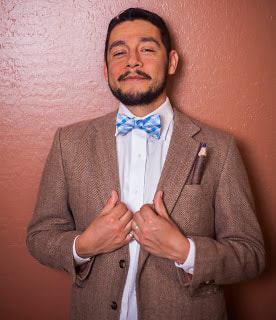
Juan Alvarado Valdivia is a Peruvian American writer born in Guadalajara, Mexico, and raised in Fremont, CA. His fiction has been published in The Acentos Review, Black Heart Magazine, The Cortland Review, Label Me Latina/o, Origins Journal, and is forthcoming from Prairie Schooner. His first book, ¡Cancerlandia!: A Memoir, received an Honorable Mention for the 2016 International Latino Book Award for Best Biography in English.

An Uninvited Guest From Beyond the Grave
Excerpt from Everyone Knows You Go Home, a novel
By Natalia Sylvester
November 1, 2012
The Big Day
The Big Day
They were married on the Day of the Dead, el Día de los Muertos, which no one gave much thought to in all the months of planning, until the bride’s deceased father-in-law showed up in the car following the ceremony. He manifested behind the wheel, then stretched his arm over the back of the passenger’s seat as he turned to face Martin and Isabel.
“Beautiful ceremony, mijo,” he said.
The couple’s smiles froze. It seemed to take an eternity for either of them to speak, and when they did, they had little more than mumbles.
Her whole life, Isabel had heard stories about spirits who spent this one day of the year with family. As a child she had built altars for her great-grandparents, vibrant tributes made out of open shoe boxes adorned with paper flowers and pictures of religious figures that looked a lot like the dioramas she created in grade school. In her teens, her family congregated around her great-aunt’s grave to clean it; one year, her mother even brought a battery-operated vacuum for the stone. “Today we remember our dead,” her mother always said.“We honor them.”
Martin’s father looked more frazzled than dead, as if he was running late because he had been caught in traffic. Isabel looked to her new husband for guidance and was shocked to realize he seemed annoyed. Not afraid, because honestly her father-in-law looked harmless, just like in the few pictures she had seen of him. No, Martin looked like he had simply bitten into a pepper that was hotter than anticipated.
“Did you know this would happen?” she said.
“No, but it’s typical of him. Typical. Only someone so shameless would show up to a wedding uninvited.”
“Martin, please!” She hadn’t expected him to be so rude. She hadn’t expected any of this at all, but her instincts to remain polite and respect her elders were deeply engrained—even more than her assumptions about life and death, apparently—and so her efforts to understand the situation were quickly overridden by her desire to make everybody feel comfortable.
It was the first time she had met her father-in-law. She smoothed her white dress, which was bulging into every inch of the seat, and straightened her veil over her shoulders. “Aren’t you going to introduce us?”
The old man sat quietly, waiting.
“I’m not talking to him,” Martin said.
“Martin, you can’t be serious.”
At this, her father-in-law smiled and leaned toward her, through the small space that separated the front and back of the white Rolls-Royce they had rented. “He is, I promise you. That kind of stubbornness runs deep in our blood. Isabel, I’m Omar. Though I hope they at least told you my name?”
“Of course. Encantada,” she said.
In ordinary circumstances, she would have leaned in to kiss him, hug him even, but these were not ordinary circumstances. She didn’t know what laws governed the dead. Could they touch? Feel? Hold? Omar seemed as if he might shift the car out of park any moment now. Instead he placed his hand over hers, and she felt not a solid touch but a vibrant warmth, like gentle electricity. Her eyes lit up, but Martin scoffed and turned away.
“Omar,” she said, letting his name empty her lungs. “Will you be joining us for the reception?” What a foolish thing to say.
“You’re very kind to ask, Isabel. Thank you.” He stepped out of the still-open door of the car and began walking toward the church gardens. Neither Isabel nor Martin attempted to follow.
She didn’t know how, but she knew she wouldn’t see him as she and Martin shared their first dance or cut their wedding cake. The whole evening, she didn’t have to glance over her shoulder to see if her father-in-law had arrived. And because the last thing she wanted to do was upset her new husband, she acted like it’d never happened.
She couldn’t fall asleep on their wedding night. The newlyweds made love distractedly, as if the act were nothing new, and of course for them it wasn’t. They were not, by the Church’s standards, good Catholics. Before today neither had been to mass in years, and they had slept together on their third-and-a-half date and had used condoms and contraceptives and spermicide, sometimes all at once.
If not new, though, she had imagined their wedding sex would feel different. Husband and wife, joining their bodies, and for the first time it wouldn’t matter if someone heard them or walked in on them or if the condom broke in eight places. They were married now. They were together for life.
Martin struggled with the perfectly round buttons that climbed, one impossibly close to the next, all the way up her spine. Isabel hadn’t realized until her dress was undone how the corset had constricted her all evening. She had to take a moment to catch her breath, and the indentations that the boning left on her skin, now exposed, itched.
She had wanted to make love to him in new ways, she really had, but more than that Isabel wanted to lie next to him, close her eyes, and open them to find Martin still there the next day, and the next, and the next after that.
When it was over, and they untangled their bodies, the newlyweds stared at the ceiling. She sighed. “That was wonderful,”she had meant to say, but the words that came out instead were, “What’s wrong?”
Martin brought his hand to his forehead. “I didn’t know he was dead.”
“Beautiful ceremony, mijo,” he said.
The couple’s smiles froze. It seemed to take an eternity for either of them to speak, and when they did, they had little more than mumbles.
Her whole life, Isabel had heard stories about spirits who spent this one day of the year with family. As a child she had built altars for her great-grandparents, vibrant tributes made out of open shoe boxes adorned with paper flowers and pictures of religious figures that looked a lot like the dioramas she created in grade school. In her teens, her family congregated around her great-aunt’s grave to clean it; one year, her mother even brought a battery-operated vacuum for the stone. “Today we remember our dead,” her mother always said.“We honor them.”
Martin’s father looked more frazzled than dead, as if he was running late because he had been caught in traffic. Isabel looked to her new husband for guidance and was shocked to realize he seemed annoyed. Not afraid, because honestly her father-in-law looked harmless, just like in the few pictures she had seen of him. No, Martin looked like he had simply bitten into a pepper that was hotter than anticipated.
“Did you know this would happen?” she said.
“No, but it’s typical of him. Typical. Only someone so shameless would show up to a wedding uninvited.”
“Martin, please!” She hadn’t expected him to be so rude. She hadn’t expected any of this at all, but her instincts to remain polite and respect her elders were deeply engrained—even more than her assumptions about life and death, apparently—and so her efforts to understand the situation were quickly overridden by her desire to make everybody feel comfortable.
It was the first time she had met her father-in-law. She smoothed her white dress, which was bulging into every inch of the seat, and straightened her veil over her shoulders. “Aren’t you going to introduce us?”
The old man sat quietly, waiting.
“I’m not talking to him,” Martin said.
“Martin, you can’t be serious.”
At this, her father-in-law smiled and leaned toward her, through the small space that separated the front and back of the white Rolls-Royce they had rented. “He is, I promise you. That kind of stubbornness runs deep in our blood. Isabel, I’m Omar. Though I hope they at least told you my name?”
“Of course. Encantada,” she said.
In ordinary circumstances, she would have leaned in to kiss him, hug him even, but these were not ordinary circumstances. She didn’t know what laws governed the dead. Could they touch? Feel? Hold? Omar seemed as if he might shift the car out of park any moment now. Instead he placed his hand over hers, and she felt not a solid touch but a vibrant warmth, like gentle electricity. Her eyes lit up, but Martin scoffed and turned away.
“Omar,” she said, letting his name empty her lungs. “Will you be joining us for the reception?” What a foolish thing to say.
“You’re very kind to ask, Isabel. Thank you.” He stepped out of the still-open door of the car and began walking toward the church gardens. Neither Isabel nor Martin attempted to follow.
She didn’t know how, but she knew she wouldn’t see him as she and Martin shared their first dance or cut their wedding cake. The whole evening, she didn’t have to glance over her shoulder to see if her father-in-law had arrived. And because the last thing she wanted to do was upset her new husband, she acted like it’d never happened.
She couldn’t fall asleep on their wedding night. The newlyweds made love distractedly, as if the act were nothing new, and of course for them it wasn’t. They were not, by the Church’s standards, good Catholics. Before today neither had been to mass in years, and they had slept together on their third-and-a-half date and had used condoms and contraceptives and spermicide, sometimes all at once.
If not new, though, she had imagined their wedding sex would feel different. Husband and wife, joining their bodies, and for the first time it wouldn’t matter if someone heard them or walked in on them or if the condom broke in eight places. They were married now. They were together for life.
Martin struggled with the perfectly round buttons that climbed, one impossibly close to the next, all the way up her spine. Isabel hadn’t realized until her dress was undone how the corset had constricted her all evening. She had to take a moment to catch her breath, and the indentations that the boning left on her skin, now exposed, itched.
She had wanted to make love to him in new ways, she really had, but more than that Isabel wanted to lie next to him, close her eyes, and open them to find Martin still there the next day, and the next, and the next after that.
When it was over, and they untangled their bodies, the newlyweds stared at the ceiling. She sighed. “That was wonderful,”she had meant to say, but the words that came out instead were, “What’s wrong?”
Martin brought his hand to his forehead. “I didn’t know he was dead.”

Born in Lima, Peru, Natalia Sylvester came to the US at age four and grew up in Florida and the Rio Grande Valley in Texas. She earned her BA in creative writing from the University of Miami, is a faculty member of the low-residency MFA program at Regis University, and works as a freelance writer in Austin. Her work has appeared in Bustle, Catapult, Electric Literature, Latina magazine, and the Austin American-Statesman. Natalia’s first novel, Chasing the Sun, was named the Best Debut Book of 2014 by Latinidad. Her latest novel,Everyone Knows You Go Home, has been named a Best Book of 2018 by Real Simple magazine and is a finalist for the International Latino Book Awards.

"Stuck outside Tenochtitlán,
with the Tezcatlipoca blues"
Excerpt with illustrations from the 2018 new edition of
Smoking Mirror Blues
By Ernest Hogan
Smoking Mirror Blues
By Ernest Hogan
NITE FLITES
"Oh, Caldonia, look over there! Such a cute guy!" said Phoebe.
It was Tezcatlipoca.
"Yeah, I guess he is." Caldonia pouted. "For a guy. Chingow! Why do you always want to talk about guys? I'm certainly not in the mood for guys – not tonight! I was hoping you wouldn't be either, especially after the way that xau-xau Beto treated you."
"Oh, Caldonia!" Phoebe took her friend's hand. "You know I love you. I guess you're right. That guy is probably xau-xau too. He even looks a little like Beto."
"Yuck!"
The two women kissed, and walked back to the scooter with their arms around each other.
*
The ghosts carried Xochitl through the streets of University City. Two figures in ragged costumes through which body armor could be seen carrying a kicking and screaming, nightgown-clad woman just wasn't anything unusual.
A lot of the National Autonomous University of Mexico students were getting into the Dead Daze phenomenon. They were out in force in an array of bizarre costumes: jackal-headed cowboys, chicken-footed dancing devils, ambulatory mermaids, heroic masked wrestlers in artificial muscle suits, women with five serpent heads each, Aztec warriors in animal-head helmets, people of all ages and sexes in skirts that looked like they were made of living snakes, life-sized papier-mâché skeletons in all manner of attire, Art Deco robots, antique sci-fi space creatures, Hollywood horror apparitions and things spawned of unique imaginations. It looked as if Hell and several Aztec heavens had broken loose.
It did make getting to wherever the ghosts wanted to take Xochitl difficult. A crowd like a giant amoeba dancing to the frenetic beat of Xuxo Ben-Xuxa's "Macumba Mutation Mambo" flowed around them and pulled them against their path as it digested them. When the ghosts tried to force their way against the flow, the members of the crowd reacted as if it was the latest type of roughhouse, martial-arts dancing.
The force of the "Macumba Mutation Mambo"-driven crowd was overwhelming.
*
Follow the group – the ones dressed like some kind of ghosts with robot-type paraphernalia underneath – you know, the ones carrying the girl who's doing a good job of acting like she's trying to get away from them. There. Good. The big crowd collided with them. Some bashada dancing has broken out. Excellent! I was hoping to catch some of that. Bashada is very popular right now; could be a selling point for this mondomentary. "Bashada on the Day of the Dead" – could make a good title. Anyway, stay with the ghosts and the girl, and try to get some closeups – she doesn't have any underwear on and there may be the chance for some nudity, which always ups the salability. Ah, yes, one of her breasts has popped out – be sure to get as close as you can, and in focus! Oh, the ghosts have lost their grip and she's running away, out of the crowd. How dramatic! This will really be a hit at the Lasha Mondo Festival!
*
Tezcatlipoca was seeing and being seen as he strutted down Hollywood Boulevard. He liked it. It was overwhelming. Now and then he had to check with the phone on his wrist to find out something that wasn't directly accessible through Beto's mind – all he had to do was look and his soul made the computer flash the desired information at the speed of light.
He soon felt that he should be doing more than just walking along as part of the parade. He was a god – the Great Trickster who dared go beyond anything the ancient coyote god ever dreamed of. He was new, now – not at the beginning of time! He was young manhood riding at the peak of its powers on hormones and black magic.
His fingers tapped the teponaxtle, and the wooden drum with the strange electronic attachments made pleasing sounds. His feet turned his strut into a dance. Music – it was in him, and now he had to let it out: some wild, magical Tezcatlipoca/trickster music that would allow him to take this world for his own.
He walked out to the middle of the street that Beto's mind associated with vehicles that breathed poisonous fire, but that was now filled with pedestrians. It seemed that the machines, automobiles, cars were destroying the very sky – how his brother Quetzalcoatl in his Ehécatl, God of the Winds, guise would have hated that! – so they weren't allowed in the heart of this city that spilled over the horizon. He sat down, placed the teponaxtle down in front of him, realized that he had to turn it on and did so, took the sticks in hand and started beating out the feelings that were writhing around in his borrowed heart and computerized soul.
The electronic accent that the drum put on its wooden sound took a little getting used to, but as a trickster and wizard he was used to adjusting to new things. Soon it became his new accent, the way Beto's voice became his voice. His music became the music of this place – Hollywood, Los Angeles/El Lay, SoCal; a place with many names, names with many places. It mixed with and infected the musics that other people carried with them. All those marching, strolling feet began to dance to Tezcatlipoca's driving beat.
*
Ralph didn't realize he was dreaming. He thought he was still in the throws of insomnia, so he got up, and drifted toward his workstation. Suddenly there was a frantic pounding on the front door, which burst open, revealing blinding, Phoenician mid-day sun, even though it was night inside, just like a Magritte painting. Beto staggered through the door, his clothes were ripped to shreds, and his body was covered with black, swollen welts that gave off blue smoke. He had something in his hands that he gave to Ralph, just before falling to the hardwood flood and disintegrating into a pile of black goo that gave off more blue smoke. What he had handed to Ralph was a human heart that didn't have a speck of blood on it – yet it was still beating. Ralph put it down next to his computer. Blood-red wires wormed out of the heart's venal and arterial openings and, with crackling sparks on contact, worked their way into Ralph's computer. The monitor flickered, then flashed with the detonation of a nuclear blast.
He whimpered as the image of a mushroom cloud the size of the Arizona sky filled his brain.
His wife, Norma, her blonde hair mussed from sleep, shook him awake.
"Wake up, dear," she said, "you're having a nightmare."
"I was dreaming about Beto," he said.
"It figures." She smirked, and got that familiar look of disgust in her blue eyes.
*
It was Tezcatlipoca.
"Yeah, I guess he is." Caldonia pouted. "For a guy. Chingow! Why do you always want to talk about guys? I'm certainly not in the mood for guys – not tonight! I was hoping you wouldn't be either, especially after the way that xau-xau Beto treated you."
"Oh, Caldonia!" Phoebe took her friend's hand. "You know I love you. I guess you're right. That guy is probably xau-xau too. He even looks a little like Beto."
"Yuck!"
The two women kissed, and walked back to the scooter with their arms around each other.
*
The ghosts carried Xochitl through the streets of University City. Two figures in ragged costumes through which body armor could be seen carrying a kicking and screaming, nightgown-clad woman just wasn't anything unusual.
A lot of the National Autonomous University of Mexico students were getting into the Dead Daze phenomenon. They were out in force in an array of bizarre costumes: jackal-headed cowboys, chicken-footed dancing devils, ambulatory mermaids, heroic masked wrestlers in artificial muscle suits, women with five serpent heads each, Aztec warriors in animal-head helmets, people of all ages and sexes in skirts that looked like they were made of living snakes, life-sized papier-mâché skeletons in all manner of attire, Art Deco robots, antique sci-fi space creatures, Hollywood horror apparitions and things spawned of unique imaginations. It looked as if Hell and several Aztec heavens had broken loose.
It did make getting to wherever the ghosts wanted to take Xochitl difficult. A crowd like a giant amoeba dancing to the frenetic beat of Xuxo Ben-Xuxa's "Macumba Mutation Mambo" flowed around them and pulled them against their path as it digested them. When the ghosts tried to force their way against the flow, the members of the crowd reacted as if it was the latest type of roughhouse, martial-arts dancing.
The force of the "Macumba Mutation Mambo"-driven crowd was overwhelming.
*
Follow the group – the ones dressed like some kind of ghosts with robot-type paraphernalia underneath – you know, the ones carrying the girl who's doing a good job of acting like she's trying to get away from them. There. Good. The big crowd collided with them. Some bashada dancing has broken out. Excellent! I was hoping to catch some of that. Bashada is very popular right now; could be a selling point for this mondomentary. "Bashada on the Day of the Dead" – could make a good title. Anyway, stay with the ghosts and the girl, and try to get some closeups – she doesn't have any underwear on and there may be the chance for some nudity, which always ups the salability. Ah, yes, one of her breasts has popped out – be sure to get as close as you can, and in focus! Oh, the ghosts have lost their grip and she's running away, out of the crowd. How dramatic! This will really be a hit at the Lasha Mondo Festival!
*
Tezcatlipoca was seeing and being seen as he strutted down Hollywood Boulevard. He liked it. It was overwhelming. Now and then he had to check with the phone on his wrist to find out something that wasn't directly accessible through Beto's mind – all he had to do was look and his soul made the computer flash the desired information at the speed of light.
He soon felt that he should be doing more than just walking along as part of the parade. He was a god – the Great Trickster who dared go beyond anything the ancient coyote god ever dreamed of. He was new, now – not at the beginning of time! He was young manhood riding at the peak of its powers on hormones and black magic.
His fingers tapped the teponaxtle, and the wooden drum with the strange electronic attachments made pleasing sounds. His feet turned his strut into a dance. Music – it was in him, and now he had to let it out: some wild, magical Tezcatlipoca/trickster music that would allow him to take this world for his own.
He walked out to the middle of the street that Beto's mind associated with vehicles that breathed poisonous fire, but that was now filled with pedestrians. It seemed that the machines, automobiles, cars were destroying the very sky – how his brother Quetzalcoatl in his Ehécatl, God of the Winds, guise would have hated that! – so they weren't allowed in the heart of this city that spilled over the horizon. He sat down, placed the teponaxtle down in front of him, realized that he had to turn it on and did so, took the sticks in hand and started beating out the feelings that were writhing around in his borrowed heart and computerized soul.
The electronic accent that the drum put on its wooden sound took a little getting used to, but as a trickster and wizard he was used to adjusting to new things. Soon it became his new accent, the way Beto's voice became his voice. His music became the music of this place – Hollywood, Los Angeles/El Lay, SoCal; a place with many names, names with many places. It mixed with and infected the musics that other people carried with them. All those marching, strolling feet began to dance to Tezcatlipoca's driving beat.
*
Ralph didn't realize he was dreaming. He thought he was still in the throws of insomnia, so he got up, and drifted toward his workstation. Suddenly there was a frantic pounding on the front door, which burst open, revealing blinding, Phoenician mid-day sun, even though it was night inside, just like a Magritte painting. Beto staggered through the door, his clothes were ripped to shreds, and his body was covered with black, swollen welts that gave off blue smoke. He had something in his hands that he gave to Ralph, just before falling to the hardwood flood and disintegrating into a pile of black goo that gave off more blue smoke. What he had handed to Ralph was a human heart that didn't have a speck of blood on it – yet it was still beating. Ralph put it down next to his computer. Blood-red wires wormed out of the heart's venal and arterial openings and, with crackling sparks on contact, worked their way into Ralph's computer. The monitor flickered, then flashed with the detonation of a nuclear blast.
He whimpered as the image of a mushroom cloud the size of the Arizona sky filled his brain.
His wife, Norma, her blonde hair mussed from sleep, shook him awake.
"Wake up, dear," she said, "you're having a nightmare."
"I was dreaming about Beto," he said.
"It figures." She smirked, and got that familiar look of disgust in her blue eyes.
*

"Oh look Caldonia," Phoebe said as the motorcycle came to a stop. "That cute guy – the one that looks a little like Beto – he sat right down in the middle of the street and he's playing music. Hey, I think Beto has a drum like that . . ."
"Don't be xau-xau, Phoebe. He's just like all the rest, and you really don't want to pay any attention to him if he reminds you of Beto. You should have some fun with me."
Phoebe squeezed Caldonia's hand. "But I am having fun with you."
Caldonia pulled something out of one of her bandoliers and slipped it into Phoebe's hand. "I mean have Fun with me, Phoebe-babe."
Phoebe looked at the stubby Fun stick in her hand. "Oh! Have Fun with you! How sumato! You mean right here on the street?"
"It's Dead Daze, we can get away with anything." Caldonia put a Fun stick between her lips, flicked it on, and sucked it off. Phoebe opened the mouth of her mask and did the same.
*
Hey! Two girls sucking Fun at five o'clock! Zoom in. Good. Our viewers love glimpses of blatant illegality. Uh-oh. Time for a station I.D.
(The Sumato Channel logo slides across the screen.)
*
"Oh!" said Phoebe. "Feels so good and sumato!"
Caldonia smiled, put an arm around Phoebe, and grabbed one of her breasts. "Now that we've had some Fun, maybe we can go back to my place and have fun."
*
You get the best Dead Daze coverage on the Sumato Channel, so stay tuned for more!
*
"Don't be xau-xau, Phoebe. He's just like all the rest, and you really don't want to pay any attention to him if he reminds you of Beto. You should have some fun with me."
Phoebe squeezed Caldonia's hand. "But I am having fun with you."
Caldonia pulled something out of one of her bandoliers and slipped it into Phoebe's hand. "I mean have Fun with me, Phoebe-babe."
Phoebe looked at the stubby Fun stick in her hand. "Oh! Have Fun with you! How sumato! You mean right here on the street?"
"It's Dead Daze, we can get away with anything." Caldonia put a Fun stick between her lips, flicked it on, and sucked it off. Phoebe opened the mouth of her mask and did the same.
*
Hey! Two girls sucking Fun at five o'clock! Zoom in. Good. Our viewers love glimpses of blatant illegality. Uh-oh. Time for a station I.D.
(The Sumato Channel logo slides across the screen.)
*
"Oh!" said Phoebe. "Feels so good and sumato!"
Caldonia smiled, put an arm around Phoebe, and grabbed one of her breasts. "Now that we've had some Fun, maybe we can go back to my place and have fun."
*
You get the best Dead Daze coverage on the Sumato Channel, so stay tuned for more!
*

"Oh look Caldonia," Phoebe said as the motorcycle came to a stop. "That cute guy – the one that looks a little like Beto – he sat right down in the middle of the street and he's playing music. Hey, I think Beto has a drum like that . . ."
"Don't be xau-xau, Phoebe. He's just like all the rest, and you really don't want to pay any attention to him if he reminds you of Beto. You should have some fun with me."
Phoebe squeezed Caldonia's hand. "But I am having fun with you."
Caldonia pulled something out of one of her bandoliers and slipped it into Phoebe's hand. "I mean have Fun with me, Phoebe-babe."
Phoebe looked at the stubby Fun stick in her hand. "Oh! Have Fun with you! How sumato! You mean right here on the street?"
"It's Dead Daze, we can get away with anything." Caldonia put a Fun stick between her lips, flicked it on, and sucked it off. Phoebe opened the mouth of her mask and did the same.
*
Hey! Two girls sucking Fun at five o'clock! Zoom in. Good. Our viewers love glimpses of blatant illegality. Uh-oh. Time for a station I.D.
(The Sumato Channel logo slides across the screen.)
*
"Oh!" said Phoebe. "Feels so good and sumato!"
Caldonia smiled, put an arm around Phoebe, and grabbed one of her breasts. "Now that we've had some Fun, maybe we can go back to my place and have fun."
*
You get the best Dead Daze coverage on the Sumato Channel, so stay tuned for more!
*
"Don't be xau-xau, Phoebe. He's just like all the rest, and you really don't want to pay any attention to him if he reminds you of Beto. You should have some fun with me."
Phoebe squeezed Caldonia's hand. "But I am having fun with you."
Caldonia pulled something out of one of her bandoliers and slipped it into Phoebe's hand. "I mean have Fun with me, Phoebe-babe."
Phoebe looked at the stubby Fun stick in her hand. "Oh! Have Fun with you! How sumato! You mean right here on the street?"
"It's Dead Daze, we can get away with anything." Caldonia put a Fun stick between her lips, flicked it on, and sucked it off. Phoebe opened the mouth of her mask and did the same.
*
Hey! Two girls sucking Fun at five o'clock! Zoom in. Good. Our viewers love glimpses of blatant illegality. Uh-oh. Time for a station I.D.
(The Sumato Channel logo slides across the screen.)
*
"Oh!" said Phoebe. "Feels so good and sumato!"
Caldonia smiled, put an arm around Phoebe, and grabbed one of her breasts. "Now that we've had some Fun, maybe we can go back to my place and have fun."
*
You get the best Dead Daze coverage on the Sumato Channel, so stay tuned for more!
*

Did you get that? In closeup? Great! Of all the sumato luck! I can't chingow believe this! It's great! We caught a SoCal citizen exercising his legal right to kill a certified gangster in self-defense! Every network on the planet will want it! We gotta move fast – plug into the mediasphere, let the world know what we got and start taking bids . . .
*
Tezcatlipoca licked the blood off the drumsticks and didn't flinch from the mild electric shock. The crowd went wild. Soon he was riding its many shoulders down Hollywood Boulevard.
*
Phoebe looked over at Tezcatlipoca riding the crowd. "He sure is sumato, even if he does look like Beto," she said, then kissed Caldonia before she could react.
*
Eventually, Xochitl made her way to her father's house.
"My daughter," the bespectacled, grey-haired man asked, "what happened?"
"All Hell's breaking loose, Papa. Evil spirits are coming to get me through my computer. My work has gotten me into big trouble."
He looked confused.
"The god-simulating program, Papa."
He shook his head. "I didn't think it was possible."
"It may not be – I haven't worked out all the details yet, but that doesn't seem to matter to all the crazy people in the world."
"Let me get you something to wear. Sit down, my daughter." He pointed her to a chair and walked over to the closet.
"No, Papa, I think I need to use your phone. Who knows what they did to my place."
She punched in her number, then the code to play her messages, hoping to find a clue to what was going on. The first few were of the "Miss Echaurren, we want to talk to you about the program you have been working on," variety; whoever wanted the program, they were willing to go to extremes to get it. Then Beto's voice came in through some long distance static, singing, in English:
"Oh, Mama, can this really be the end?
to be stuck outside Tenochtitlán,
with the Tezcatlipoca blues, again!"
Then he switched to his heavily accented Spanish:
"Well, maybe not the end, Xochitlita. Maybe it's the beginning, a new beginning, far from Tenochtitlán, where we're going to be singing a brand new kind of Tezcatlipoca blues as soon as I run through the program of yours that I just had to make an unauthorized clone of. Sorry I couldn't come out and ask you for it, baby, but you were being so xau-xau cautious, worrying about all those control elements. You can't control gods, Xochitl; if you could, they wouldn't be gods. Zero hour will be when Dead Daze kicks off. I'll let you know what happens, or maybe the world will tell you first. Later, baby."
Xochitl said, "Oh my God!" and didn't listen through the next three renditions of "Miss Echaurren, we want to talk to you about the program . . ."
*
Tezcatlipoca saw Phoebe in the distance. Recognizing her caused a violent reaction in Beto's mind. Beto was repulsed. This interested Tezcatlipoca. It was a chance to see who was the master here.
"That metal-faced woman!" Tezcatlipoca pointed to Phoebe. "I want her!"
*
Xochitl's father brought a large bathrobe. "Here, my daughter, put this on."
She did. Like a glass-eyed zombie.
"Could it possibly be that bad?" he asked.
"Worse than I thought. Not only are some fanatics after the program, but that North American I met a few months ago, Beto . . ."
"The one from California." He shook his head, sorrowfully.
"Yes, he's trying to use the program to evoke Tezcatlipoca. And the version he cloned doesn't have any of my control elements."
"Why, if it works it could be a catastrophe."
"It may have already happened!"
"Well, don't worry, my daughter, you can stay here as long as you need to."
"Ay! I can't do that! I called my place on your phone! They could have traced it! They might be on their way here already! How could I have been so stupid?"
He put his arms around her. "So, where can you go to be safe, Xochitlita? I'll do whatever I can to help you."
"Oh – I don't know. There may not be any safe place."
"Then sit down. Relax. Think." He led her back to the chair.
*
Phoebe broke the kiss, and pushed Caldonia away.
"That cute guy," Phoebe said, "I think he means me."
She looked. Tezcatlipoca was grinning at her.
"He does mean me!" She pushed her way to him.
Caldonia growled.
*
Xochitl jumped up. "I've got to leave the country! Now. Tonight. Can you lend me some clothes and money?"
"Of course, but the program, is it where the fanatics can get it?"
*
Tezcatlipoca licked the blood off the drumsticks and didn't flinch from the mild electric shock. The crowd went wild. Soon he was riding its many shoulders down Hollywood Boulevard.
*
Phoebe looked over at Tezcatlipoca riding the crowd. "He sure is sumato, even if he does look like Beto," she said, then kissed Caldonia before she could react.
*
Eventually, Xochitl made her way to her father's house.
"My daughter," the bespectacled, grey-haired man asked, "what happened?"
"All Hell's breaking loose, Papa. Evil spirits are coming to get me through my computer. My work has gotten me into big trouble."
He looked confused.
"The god-simulating program, Papa."
He shook his head. "I didn't think it was possible."
"It may not be – I haven't worked out all the details yet, but that doesn't seem to matter to all the crazy people in the world."
"Let me get you something to wear. Sit down, my daughter." He pointed her to a chair and walked over to the closet.
"No, Papa, I think I need to use your phone. Who knows what they did to my place."
She punched in her number, then the code to play her messages, hoping to find a clue to what was going on. The first few were of the "Miss Echaurren, we want to talk to you about the program you have been working on," variety; whoever wanted the program, they were willing to go to extremes to get it. Then Beto's voice came in through some long distance static, singing, in English:
"Oh, Mama, can this really be the end?
to be stuck outside Tenochtitlán,
with the Tezcatlipoca blues, again!"
Then he switched to his heavily accented Spanish:
"Well, maybe not the end, Xochitlita. Maybe it's the beginning, a new beginning, far from Tenochtitlán, where we're going to be singing a brand new kind of Tezcatlipoca blues as soon as I run through the program of yours that I just had to make an unauthorized clone of. Sorry I couldn't come out and ask you for it, baby, but you were being so xau-xau cautious, worrying about all those control elements. You can't control gods, Xochitl; if you could, they wouldn't be gods. Zero hour will be when Dead Daze kicks off. I'll let you know what happens, or maybe the world will tell you first. Later, baby."
Xochitl said, "Oh my God!" and didn't listen through the next three renditions of "Miss Echaurren, we want to talk to you about the program . . ."
*
Tezcatlipoca saw Phoebe in the distance. Recognizing her caused a violent reaction in Beto's mind. Beto was repulsed. This interested Tezcatlipoca. It was a chance to see who was the master here.
"That metal-faced woman!" Tezcatlipoca pointed to Phoebe. "I want her!"
*
Xochitl's father brought a large bathrobe. "Here, my daughter, put this on."
She did. Like a glass-eyed zombie.
"Could it possibly be that bad?" he asked.
"Worse than I thought. Not only are some fanatics after the program, but that North American I met a few months ago, Beto . . ."
"The one from California." He shook his head, sorrowfully.
"Yes, he's trying to use the program to evoke Tezcatlipoca. And the version he cloned doesn't have any of my control elements."
"Why, if it works it could be a catastrophe."
"It may have already happened!"
"Well, don't worry, my daughter, you can stay here as long as you need to."
"Ay! I can't do that! I called my place on your phone! They could have traced it! They might be on their way here already! How could I have been so stupid?"
He put his arms around her. "So, where can you go to be safe, Xochitlita? I'll do whatever I can to help you."
"Oh – I don't know. There may not be any safe place."
"Then sit down. Relax. Think." He led her back to the chair.
*
Phoebe broke the kiss, and pushed Caldonia away.
"That cute guy," Phoebe said, "I think he means me."
She looked. Tezcatlipoca was grinning at her.
"He does mean me!" She pushed her way to him.
Caldonia growled.
*
Xochitl jumped up. "I've got to leave the country! Now. Tonight. Can you lend me some clothes and money?"
"Of course, but the program, is it where the fanatics can get it?"
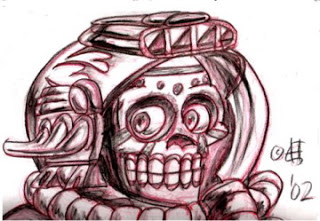
She reached into the bodice of her nightgown. "I hope it didn't fall out. No, here it is. I jammed it into a seam." She pulled out an ant-sized nanochip. "They saw me dressed like this and didn't think to search me – not very imaginative, I guess. If they had just pointed their software sniffers at me . . ."
"I'll do what I can to help you. Where do you think you should go?"
"Los Angeles."
He frowned. "California? Where that Beto fellow lives."
"I know, I know, it's crazy – almost as crazy as he is, but I have to. And at least it will get me out of here, away from whoever it is that's after me, and allow me to stop him, or try to undo any damage he's done."
"I'll do what I can to help you. Where do you think you should go?"
"Los Angeles."
He frowned. "California? Where that Beto fellow lives."
"I know, I know, it's crazy – almost as crazy as he is, but I have to. And at least it will get me out of here, away from whoever it is that's after me, and allow me to stop him, or try to undo any damage he's done."
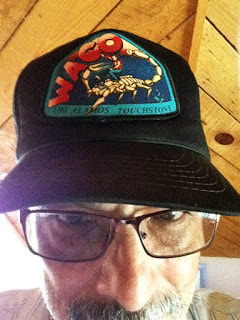
Ernest Hogan, a six-foot tall Aztec leprechaun, was born in East L.A. and he grew up in West Covina, which he considered one of the most boring places in California. Monster movies, comic books, and science fiction, he says, saved his life. The author of High Aztech, Smoking Mirror Blues, and Cortez on Jupiter, he is considered the Father of Chicano Science Fiction, though there hasn’t been any kind of DNA test. His short fiction has appeared in Amazing Stories, Analog, Science Fiction Age, and many other publications. Recently discovered by academia, his “Chicanonautica Manifesto” appeared in Aztlan: A Journal of Chicano Studies.
Illustrations by Ernest Hogan
Illustrations by Ernest Hogan
Archives
July 2024
June 2024
April 2024
March 2024
November 2023
August 2023
July 2023
June 2023
May 2023
April 2023
February 2023
January 2023
December 2022
November 2022
September 2022
August 2022
July 2022
June 2022
May 2022
April 2022
March 2022
February 2022
December 2021
November 2021
September 2021
August 2021
July 2021
June 2021
May 2021
April 2021
December 2020
September 2020
July 2020
November 2019
September 2019
July 2019
June 2019
May 2019
April 2019
March 2019
January 2019
December 2018
November 2018
October 2018
September 2018
August 2018
June 2018
May 2018
April 2018
March 2018
February 2018
January 2018
February 2010
Categories
All
Archive
Aztec
Aztlan
Barrio
Bilingualism
Borderlands
Boricua / Puerto Rican
Brujas
California
Chicanismo
Chicano/a/x
ChupaCabra
Colombian
Colonialism
Contest
Contest Winners
Crime
Cuba
Cuban American
Cuento
Cultura
Culture
Curanderismo
Death
Detective Novel
Día De Muertos
Dominican
Ebooks
El Salvador
Español
Español & English
Excerpt
Extra Fiction
Extra Fiction Contest
Fable
Family
Fantasy
Farmworkers
Fiction
First Publication
Flash Fiction
Genre
Guatemalan American
Hispano
Historical Fiction
History
Horror
Human Rights
Humor
Immigration
Indigenous
Inglespañol
Joaquin Murrieta
La Frontera
La Llorona
Latino Scifi
Los Angeles
Magical Realism
Mature
Mexican American
Mexico
Migration
Music
Mystery
Mythology
New Mexico
New Mexico History
Nicaraguan American
Novel
Novel In Progress
Novella
Penitentes
Peruvian American
Pets
Puerto Rico
Racism
Religion
Review
Romance
Romantico
Scifi
Sci Fi
Serial
Short Story
Southwest
Tainofuturism
Texas
Tommy Villalobos
Trauma
Women
Writing
Young Writers
Zoot Suits
 RSS Feed